
Amortization schedule calculator
See where every payment actually goes. The monthly figure is the easy part. The schedule shows you the thing that changes decisions: on a 30-year loan at 6.5%, it takes until payment 233 before more of your money goes to the balance than to the bank.
Amortization calculator
Payment schedule
Switch to Every payment for the full month-by-month table. The CSV contains every row.
How to read the table
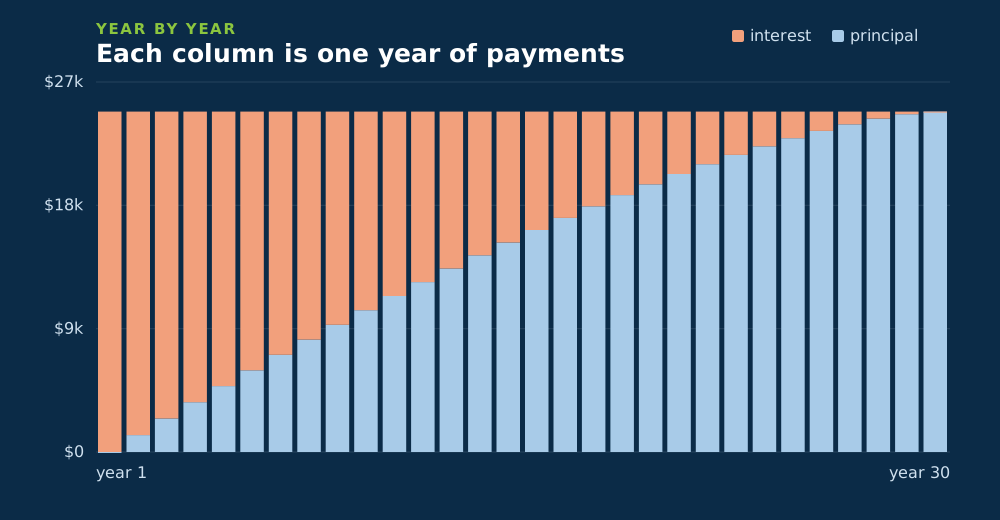
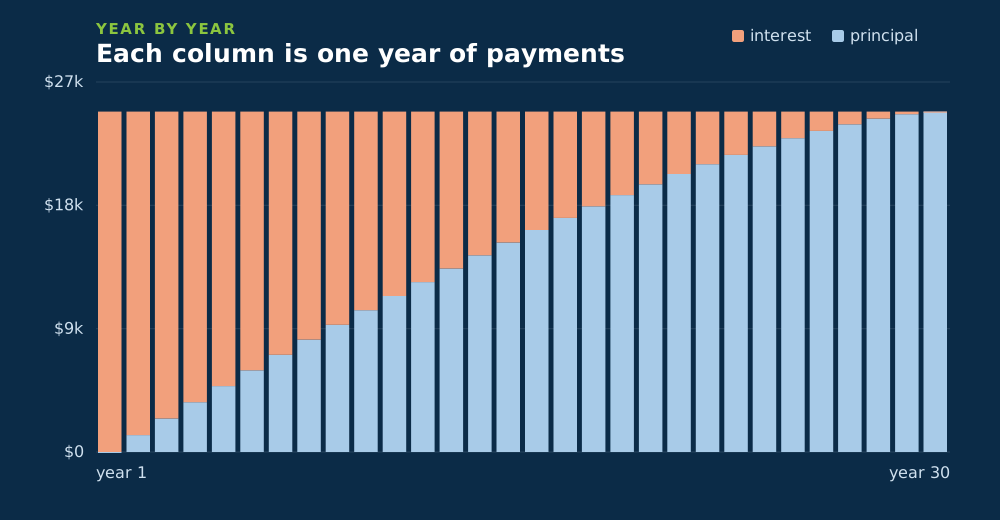
Each row splits one payment in two. Interest is the lender's charge for the month, worked out on whatever you still owe. Principal is the only part that reduces the debt.
Because interest is charged on the balance, and the balance starts out as nearly the whole loan, the first payments are mostly interest. On the default figures above, payment one is about $1,896 interest and $316 principal. The proportions reverse slowly, and the crossover lands around year twenty.
Why $100 extra does more than it looks
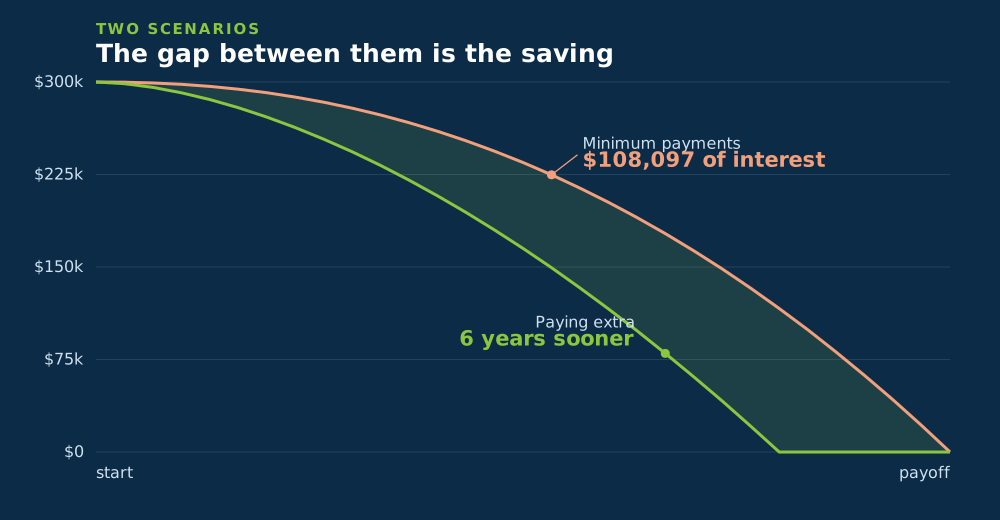
An extra payment is not split. All of it comes off the balance, which lowers every future month's interest charge, which frees more of the next payment for principal. The effect compounds. On a $350,000 loan at 6.5%, $200 a month removes six years and about $108,000 of interest.
When your lender's number differs
A few dollars a month is normal, and comes from rounding and the day-count basis in your note. A large gap almost always means something is in their figure that is not in yours: an escrow payment, mortgage insurance, or a financed origination fee.
Guides that explain this
Written with the same engine, so every figure agrees with the calculator.
 Amortization explained: where every payment actually goesA plain-English guide to amortization — why early payments are almost all interest, when the crossover happens, and how to read your own schedule with confidence.9 min read
 Compound interest works both waysHow compounding works, why frequency matters far less than people think, the rule of 72, and why the same force that grows savings traps card debt.9 min read
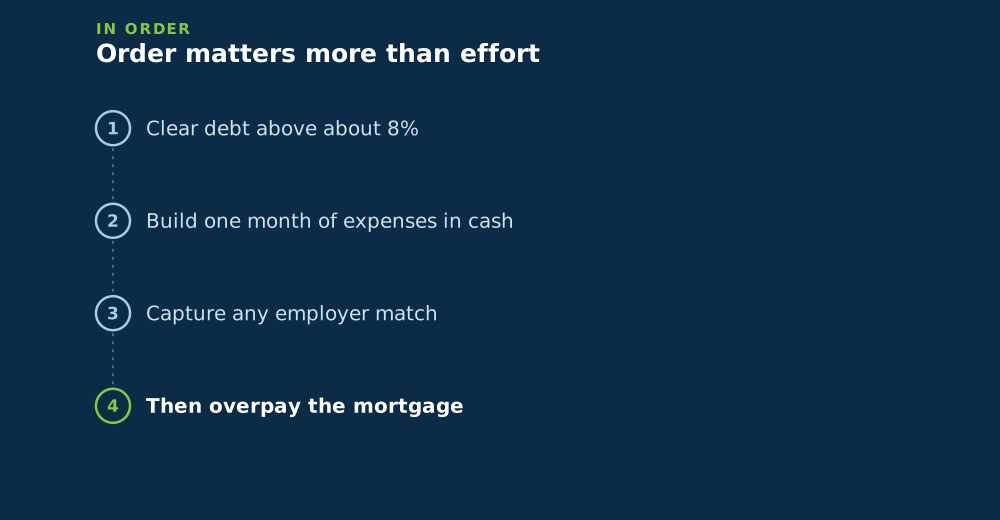 How to pay off your mortgage earlySix ways to clear a mortgage early, what each actually saves in dollars and years, and the cases where overpaying is the wrong move.11 min read
Questions people actually ask
What is an amortization schedule?
A table with one row per payment showing how much of that payment covers interest, how much reduces the balance, and what is left owing afterwards. It runs from the first payment to the last.
Why is nearly all of my early payment going to interest?
Interest is charged on the outstanding balance, and at the start the balance is almost the whole loan. As the balance falls the interest portion falls with it. On a 30-year loan at 6.5% the crossover, where principal finally exceeds interest in a single payment, arrives at about payment 233.
Can I download the schedule?
Yes. Download CSV saves every row for Excel, Google Sheets or Numbers. Print produces a clean copy with the form, navigation and ads stripped out.
Does this work for car and personal loans?
Yes. Any fixed-rate loan with level payments amortizes identically. Enter the amount, rate and term and the table is the same shape.
Other calculators
All free, all in your browser.
- Extra payment calculatorWhat $200 a month is worth in interest saved and years removed.
- Refinance break-evenWhen the closing costs are recovered, and whether a new term quietly costs more.
- Compare three offersDifferent rates, terms and fees judged on total cost, not monthly payment.
- Biweekly vs monthlyWhether fortnightly payments are worth it, and how to get the same result free.
- Mortgage calculatorPrincipal, interest, tax, insurance, PMI and HOA in one honest number.
- Auto loan calculatorTrade-in, negative equity, sales tax and dealer fees, all financed.