
Interest-only calculator
During the interest-only window the balance does not move at all. What matters is the payment on the other side of it, when the same debt has to amortise over a shorter remaining term.
Interest-only calculator
Payment schedule
What an interest-only period actually does
You pay the lender's monthly charge and nothing else. The balance on the day the period ends is identical to the balance on the day you signed. Nothing was repaid; time was bought.
On $400,000 at 6.75%, the interest-only payment is $2,250 a month. Over ten years that is $270,000 paid, and you still owe $400,000.
The payment shock is the point to model
When the window closes, the full balance has to amortise over what remains of the term. On a 30-year loan with a 10-year interest-only period, $400,000 must clear in twenty years rather than thirty — so the payment jumps from $2,250 to about $3,041, a 35% increase arriving on a single date you knew about a decade in advance.
The shorter the remaining term, the sharper the jump. A 5-year interest-only period on a 15-year loan is brutal.
When it is defensible
- Genuinely irregular income. Commission or seasonal earnings, where you overpay in good months and hold the floor in lean ones — provided the loan allows overpayment.
- A bridge with a known exit. A property being sold or refinanced on a date you control.
- Investment property where the cash flow is the point and you are deliberately prioritising yield over amortisation.
When it is not
When it is the only way the payment works. An interest-only period taken because the amortising payment is unaffordable is a deferral, not a solution — the affordability problem returns larger, on a fixed date, with no principal repaid in between. That structure is a large part of what went wrong in 2007.
Guides that explain this
Written with the same engine, so every figure agrees with the calculator.
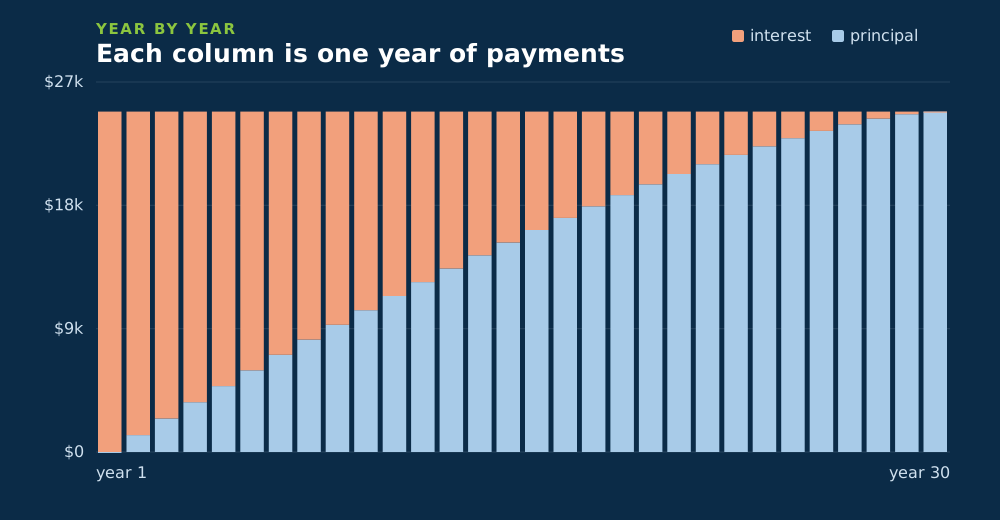 Amortization explained: where every payment actually goesA plain-English guide to amortization — why early payments are almost all interest, when the crossover happens, and how to read your own schedule with confidence.9 min read
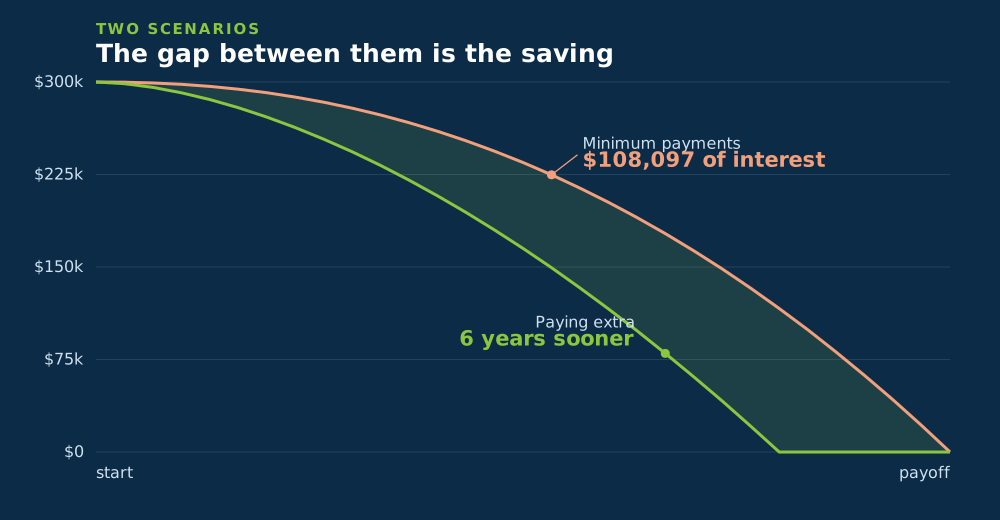 Compound interest works both waysHow compounding works, why frequency matters far less than people think, the rule of 72, and why the same force that grows savings traps card debt.9 min read
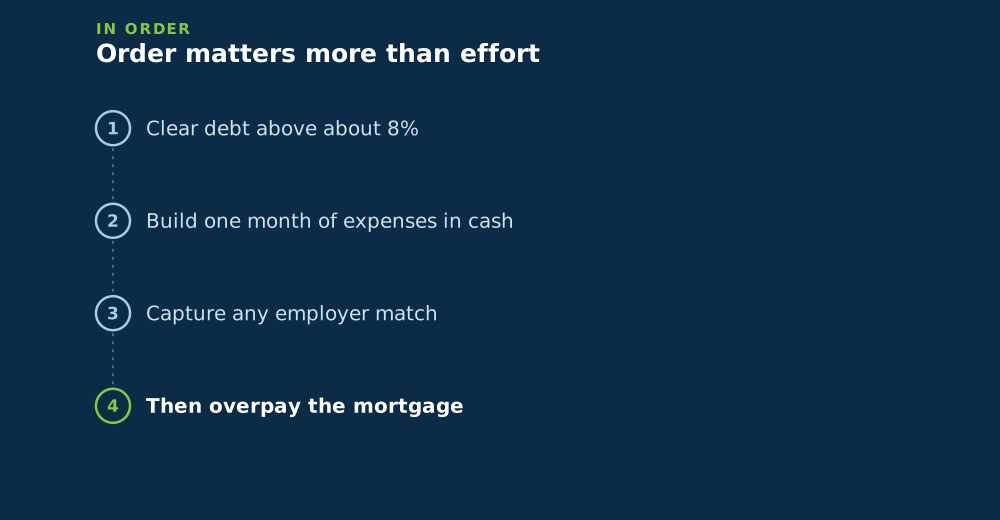 How to pay off your mortgage earlySix ways to clear a mortgage early, what each actually saves in dollars and years, and the cases where overpaying is the wrong move.11 min read
Questions people actually ask
What happens when an interest-only period ends?
The full balance amortises over the remaining term, so the payment jumps sharply. On $400,000 at 6.75% with a 10-year interest-only period on a 30-year loan, the payment rises from $2,250 to about $3,041 — a 35% increase.
Does an interest-only loan build any equity?
None from payments. The balance is unchanged when the period ends. Any equity comes only from the property rising in value.
Is an interest-only mortgage a bad idea?
It depends why you are taking it. With irregular income or a known exit date it can be sound. Taken because the amortising payment is unaffordable, it defers the problem and returns it larger on a fixed date.
How much more interest does interest-only cost?
Substantially more, because the balance stays at its maximum for the whole interest-only period. The calculator above compares the total against a conventional amortising loan of the same term.