
Why it works so well
Your scheduled payment is divided by the lender: interest first, remainder to principal. An extra payment is not divided. All of it comes off the balance, and every future interest charge is then calculated on that smaller number.
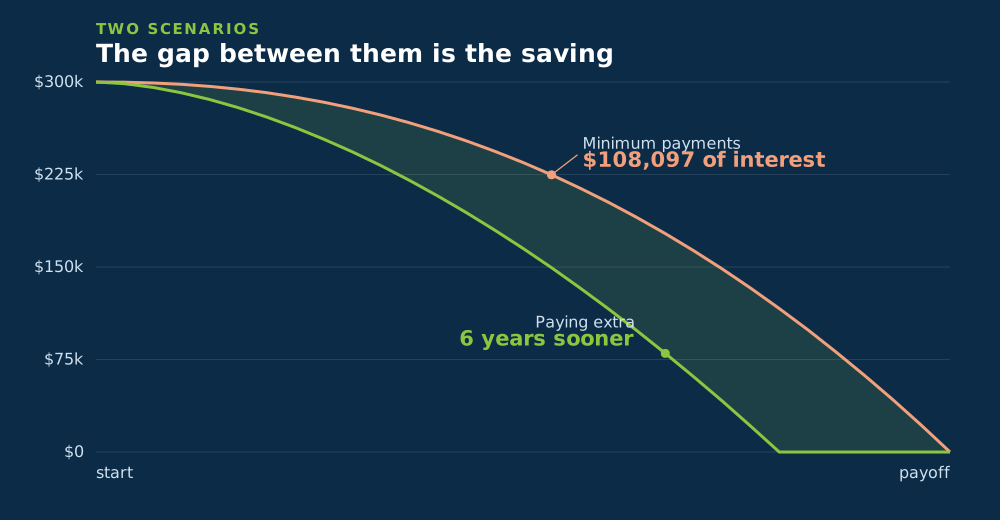
On a $350,000 loan at 6.5% over 30 years, the total interest is $446,406. Add $200 a month and it falls to about $338,000 — a saving near $108,000 for roughly $17,000 of extra payments, with the loan gone six years sooner.
The return is certain. There is no market risk, no tax on the gain, and no sequence-of-returns problem. A 6.5% mortgage overpayment is a guaranteed 6.5% return.
Six methods, ranked by what they actually save
1. A fixed monthly overpayment
The simplest and, for most people, the best. Set a standing order for an amount you will not miss and mark it principal-only. $100, $200, $500 — the number matters less than the consistency.
Model your own figure with the extra payment calculator before you commit, because the result is usually larger than people expect.
2. One extra payment a year
Divide your monthly payment by twelve and add that to each month. On a $2,212 payment that is $184 extra a month, and it produces one additional full payment each year. This is the mechanism behind every biweekly plan, done for free.
3. Biweekly payments
Paying half your payment every fortnight means 26 half-payments a year, which equals thirteen monthly payments instead of twelve. The saving is real — around $103,000 and just under six years on our example loan.
But understand where it comes from. Almost none of the benefit is the fortnightly timing; nearly all of it is that thirteenth payment. Which means a servicer charging a setup fee or a monthly administration charge is selling you something your own bank does for nothing. Check the arithmetic on the biweekly comparison.
4. Lump sums
A bonus, an inheritance, a tax refund. For the same total money a lump sum beats gradual overpayment, because the balance drops immediately and stays lower for longer. Applied early in a loan, the effect is dramatic.
5. Refinancing to a shorter term
Moving from 30 years to 15 raises the payment substantially and cuts total interest enormously. It is the only method on this list that is not reversible — you have contracted to the higher payment. Do it only if the new payment is comfortable in a bad month, not just a good one.
6. Recasting
Less well known. After a large principal payment, some lenders will recalculate your monthly payment across the remaining term for a small fee, typically a few hundred dollars. You keep the original end date but pay less each month. This is the opposite of paying off early — it is for freeing cash flow, not saving interest.
Four traps
The servicer applies it to next month
The most common and most costly mistake. If you do not specify, some servicers hold extra money toward your next scheduled payment rather than reducing the balance. You get no benefit at all. Label every extra payment as principal-only and verify on the following statement.
Prepayment penalties
Uncommon on conventional US mortgages since 2014, but they exist, particularly on non-QM and investor loans. Read your note before you start.
Losing the emergency fund
Money in a mortgage is extremely difficult to get back out. You need a cash-out refinance or a HELOC, and both require you to qualify — which is hardest exactly when you most need the money. Keep three to six months of expenses liquid first.
Overpaying the wrong debt
If you carry credit card debt at 22% while overpaying a 6% mortgage, you are losing 16 points a year on every dollar. Clear the expensive debt first, always.
When you should not do it
The case against is stronger than mortgage-payoff enthusiasts admit.
You have a very low fixed rate
Anyone holding a 2.75% or 3.25% mortgage from the 2020–2021 window is borrowing below inflation. Overpaying it returns 3%, guaranteed, when cash in a decent savings account may pay more with no loss of access.
You are not getting your employer match
A 50% match on retirement contributions is an immediate 50% return. Nothing on your mortgage competes.
You might move soon
Overpayment builds equity you will realise on sale — but so would keeping the cash, and the cash stays accessible. If a move is likely within a few years, liquidity is worth more.
Your rate is variable
Overpaying an adjustable loan is sound, but the calculation shifts every reset. Model it at the cap, not at today's rate.
A workable decision rule
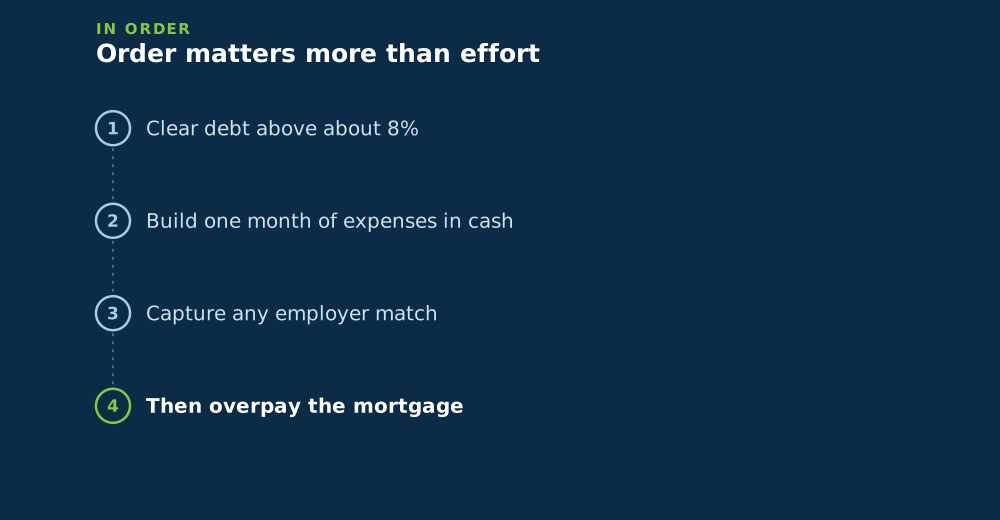
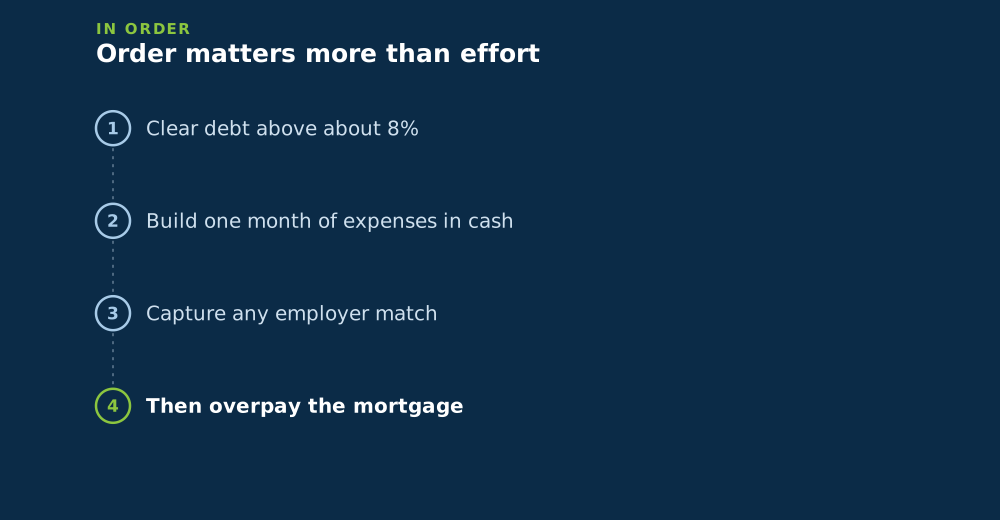
Compare your mortgage rate against three things, in order:
- Your most expensive other debt. If anything costs more, pay that instead.
- Your emergency fund. Below three months of expenses, build that first.
- Your realistic after-tax investment return. Not the headline stock market average — your actual expected return after tax and fees, discounted for the fact that it is uncertain and the mortgage saving is not.
If your mortgage rate still wins, overpay. If it is close, split the difference; the psychological value of a shrinking balance is real and worth something even when the spreadsheet is neutral.