
The two methods
Both assume the same thing: you make the minimum payment on every debt, then direct all spare money at exactly one of them. The only disagreement is which.
Avalanche — highest rate first
Attack the debt with the highest interest rate regardless of size. When it clears, roll everything into the next-highest. This minimises total interest, always. There is no scenario where another order costs less.
Snowball — smallest balance first
Attack the smallest balance regardless of rate. When it clears, roll everything into the next smallest. This maximises the number of accounts closed early, which is a psychological payoff rather than a financial one.
What the gap actually costs
Consider a common set of balances:
- Credit card A: $2,400 at 24.99%
- Credit card B: $850 at 19.99%
- Car loan: $11,200 at 7.4%
- Personal loan: $4,500 at 12.5%
With $500 a month above the minimums, avalanche clears everything in roughly 34 months. Snowball takes about 35 and costs a few hundred dollars more in interest.
That is the honest headline: for most real debt profiles the difference is small — usually a few hundred dollars and a month or two. The difference grows when one debt is both large and expensive, and shrinks when the rates are clustered.
You can model your own using the extra payment calculator on each debt in turn, ordering them either way.
Why snowball keeps winning studies
Research on consumer debt repayment has repeatedly found that people who clear small balances first are more likely to stay with a repayment plan. The proposed mechanism is straightforward: closing an account is a visible, complete win, and visible wins sustain effort in a way that a slowly falling balance does not.
This matters because the mathematically optimal plan you abandon in month nine costs infinitely more than the slightly suboptimal plan you finish.
So the real question is not "which is cheaper?" — avalanche is, always. It is "which will I still be doing in two years?"
A hybrid that captures most of both
Order by rate, but pull any debt under about $1,000 to the front regardless.
You get one or two quick closures for momentum, then the avalanche ordering does the heavy lifting on the balances where rate actually matters. On the example above this clears in 34 months at a cost within tens of dollars of pure avalanche.
A second useful adjustment: if one debt is causing disproportionate stress — a loan from family, a card that is close to its limit, a debt tied to an ex-partner — clear it first. Financial decisions made while anxious are usually worse than the interest you save by being rigorous.
Do these first
Both methods assume some groundwork.
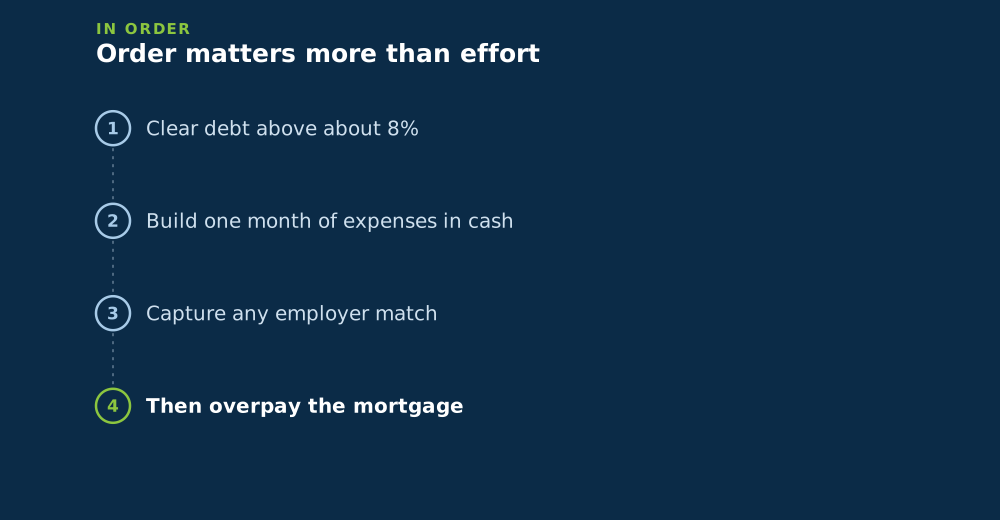
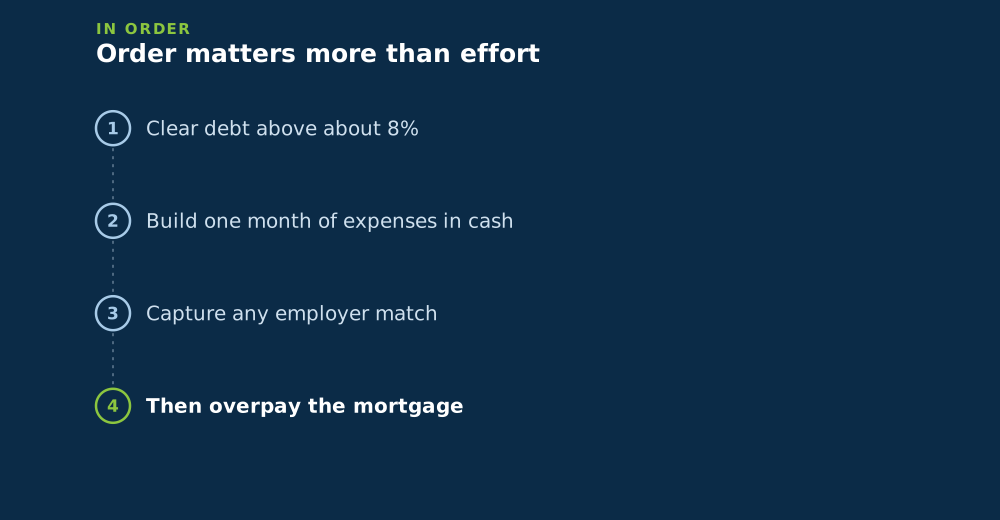
1. A small emergency buffer
$1,000 to $2,000 in cash. Without it the first unexpected repair goes back on a card and you restart. This buffer is not an investment decision; it is what stops the plan collapsing.
2. Capture any employer match
A 50% match is an instant 50% return. No consumer debt outruns that.
3. Check for a cheaper route
A 0% balance transfer with a 3% fee costs 3% for 12–21 months rather than 25% a year. A credit union personal loan may consolidate cards at half the rate. Either can save more in one afternoon than a year of disciplined ordering — but only if you stop using the cleared cards.
Five mistakes
- Spreading extra money across everything. Splitting $500 four ways clears nothing. Both methods work because they concentrate.
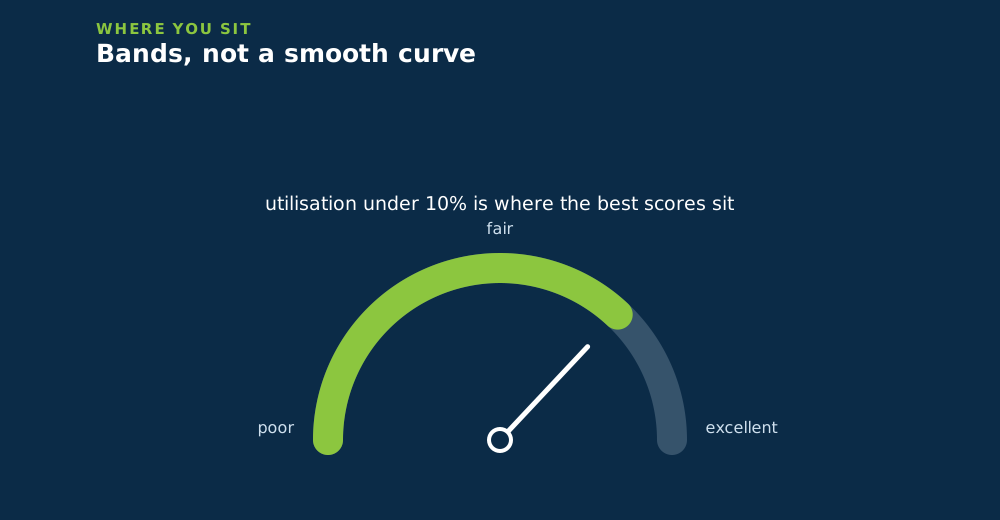
- Closing cards as you clear them. This cuts your available credit and can lower your score by raising utilisation. Cut them up if you must, but leave the accounts open.
- Missing a minimum while overpaying elsewhere. A late payment costs a fee and a credit-report mark that outweighs any interest saved.
- Consolidating without changing behaviour. The most expensive outcome on this page: cards cleared by a consolidation loan and then run back up.
- Skipping the buffer. Covered above, and it is the most common reason plans fail.
Choosing
Use avalanche if the rate spread is wide, your largest debt is also your most expensive, and you have finished long financial projects before.
Use snowball if you have several small balances, you have abandoned a repayment plan previously, or the debt is a source of active anxiety.
Use the hybrid if you are unsure — which most people should be, because it costs almost nothing and hedges the only risk that actually matters.