
Extra payment calculator
What does paying extra actually save? Extra money skips the interest column entirely and lands on the balance. Here is what that is worth on your loan, in dollars and in years.
Extra payment calculator
Schedule with your extra payments
Every row reflects the extra amount. Download it to compare against your lender's statement.
Where the saving comes from
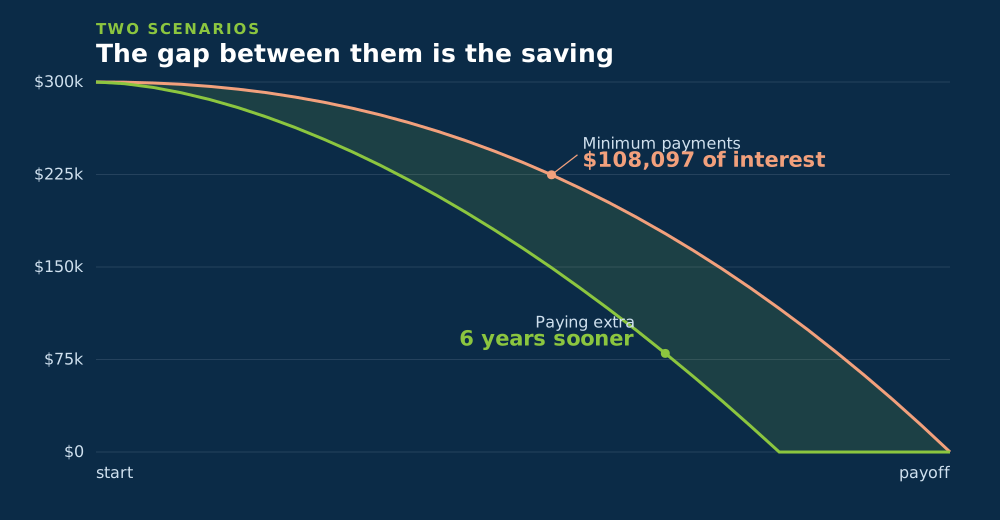
Your required payment is split by the lender: interest first, the remainder to principal. An extra payment is not split. All of it reduces the balance, so every month afterwards the interest is charged on a smaller number. That is why a modest amount early beats a large amount late.
Monthly, or one lump sum?
A lump sum today beats the same money paid gradually, because the balance drops sooner and stays lower for longer. In practice the better plan is the one you will keep doing. A standing order you never notice usually outperforms a large payment you intend to make.
Two things to check first
- Prepayment penalties. Uncommon on ordinary mortgages, real on some loans. Look at your note.
- How the servicer applies it. Some hold extra money toward next month's payment instead of reducing the balance, which does nothing for you. Mark it principal-only and check the next statement.
There is also an opportunity-cost question this cannot answer. Paying down a 6.5% loan is a guaranteed 6.5% return; whether that beats your alternatives depends on your other debts, your tax position and whether you have an emergency fund.
Guides that explain this
Written with the same engine, so every figure agrees with the calculator.
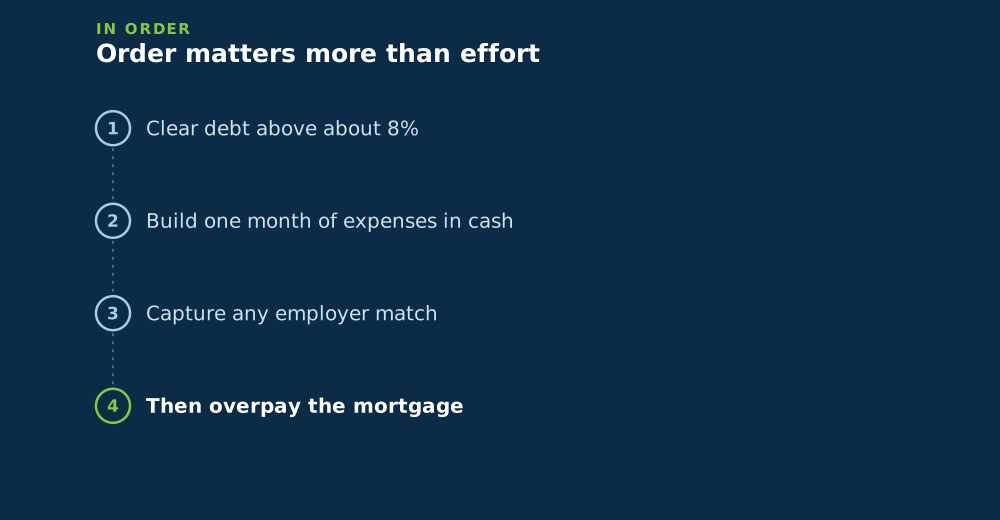 How to pay off your mortgage earlySix ways to clear a mortgage early, what each actually saves in dollars and years, and the cases where overpaying is the wrong move.11 min read
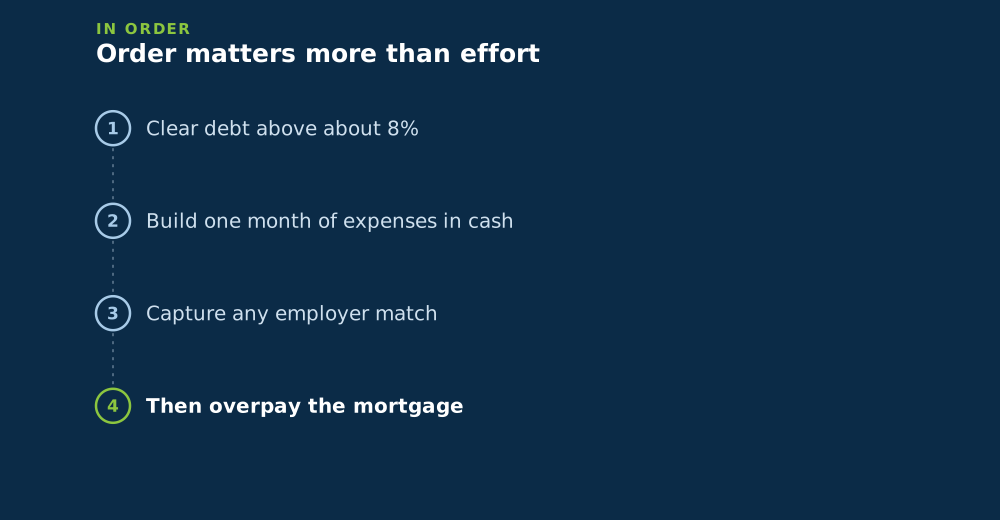 Debt snowball vs avalancheThe maths says avalanche, the evidence on human behaviour says snowball. Here is what each costs, when the gap matters, and a hybrid that captures most of both.9 min read
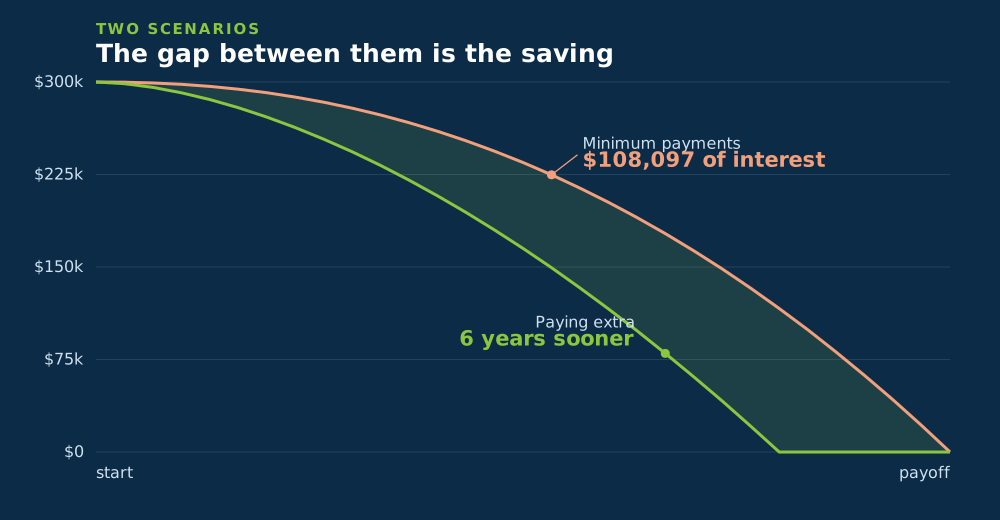 Compound interest works both waysHow compounding works, why frequency matters far less than people think, the rule of 72, and why the same force that grows savings traps card debt.9 min read
Questions people actually ask
Is it better to pay extra monthly or make one lump sum?
A lump sum saves more for the same total money, because the balance drops immediately and every later interest charge is worked out on the smaller figure. In practice the better plan is the one you will stick to.
Will paying extra lower my monthly payment?
Normally no. The payment stays the same and the term gets shorter. Some lenders offer a recast, which recalculates the payment over the remaining term after a large principal reduction, usually for a fee.
Should I pay off the loan early or invest instead?
Paying down a loan is a certain return equal to your interest rate, with no tax and no volatility. Investing may return more but is not guaranteed. Most people clear high-rate debt first, keep an emergency fund, and treat cheap long-term debt as less urgent.
Do I need to tell my lender the money is for principal?
Usually yes. If you do not, some servicers hold it toward the next scheduled payment instead of reducing the balance. Mark it as principal-only and check the following statement.
Other calculators
- Amortization scheduleThe whole table, payment by payment, with extra payments and a CSV export.
- Refinance break-evenWhen the closing costs are recovered, and whether a new term quietly costs more.
- Compare three offersDifferent rates, terms and fees judged on total cost, not monthly payment.
- Biweekly vs monthlyWhether fortnightly payments are worth it, and how to get the same result free.
- Mortgage calculatorPrincipal, interest, tax, insurance, PMI and HOA in one honest number.
- Auto loan calculatorTrade-in, negative equity, sales tax and dealer fees, all financed.