
What negative equity is
Negative equity — being upside down, or underwater — means the loan balance exceeds what the car is worth. Sell it and the sale price does not clear the debt; you write a cheque for the difference.
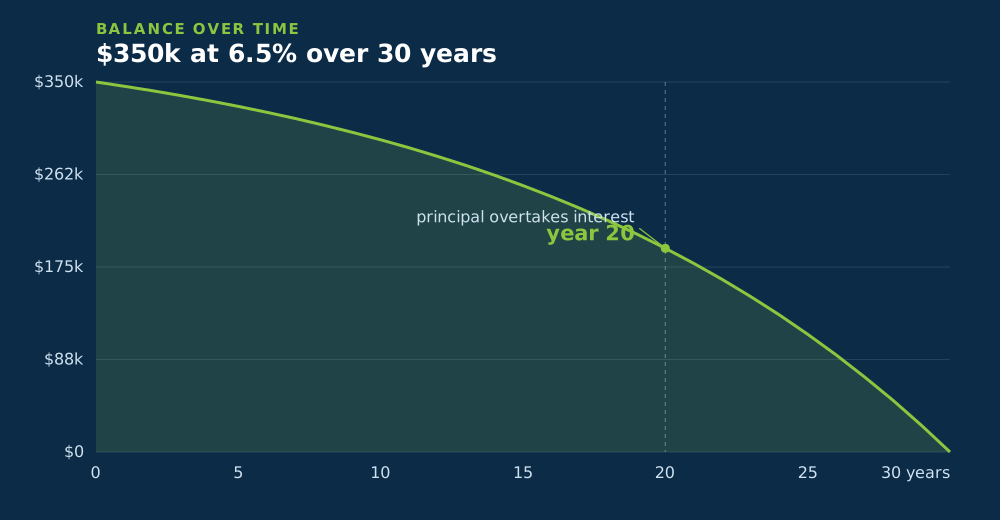
It happens because two curves move at different speeds. A car loses value fastest in its first years, typically 20% in year one and roughly 15% a year after that. A loan balance falls slowly at first, because early payments are mostly interest. For a stretch at the beginning of almost every car loan, the debt is above the value.
The question is only how deep the gap goes and how long it lasts.
What makes it worse
A long term
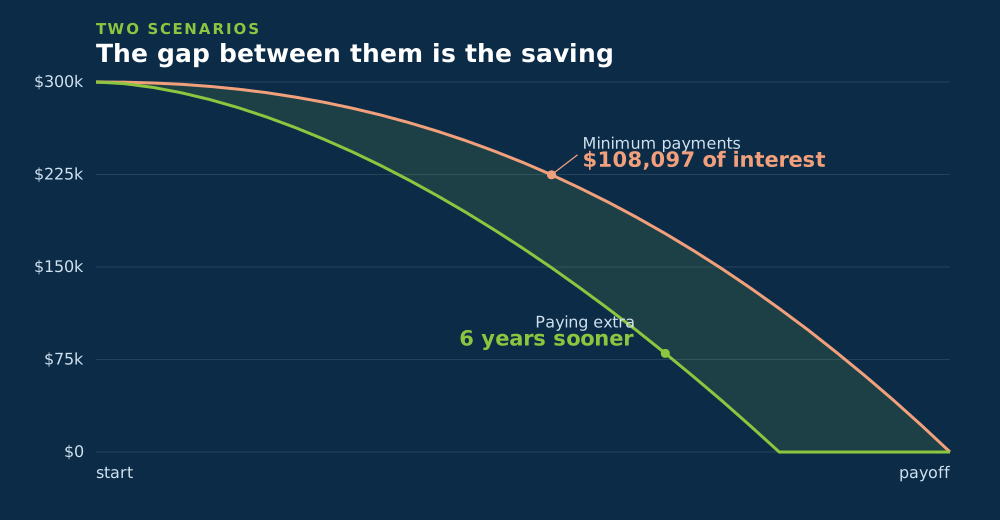
The single biggest factor. A 36-month loan pays principal down fast enough to stay near the value curve. An 84-month loan does not, and can leave you underwater for four or five years.
A small deposit
Zero down means you are underwater the moment you leave the forecourt, because the car has already lost the sales tax, the fees and the first slice of depreciation.
Financed extras
Tax, registration, documentation fees, extended warranties, paint protection, gap insurance. All are commonly rolled into the loan. None of them add a cent to the car's resale value.
Rolled-over shortfall
The compounding version. Trading in a car with $6,000 still owing above its value adds that $6,000 to the new loan. You now finance two cars and own one.
What rolling it forward costs
Take a $35,000 car, $3,000 down, 6.5% sales tax, $800 in fees, 7.9% APR over 60 months. The amount financed is $35,075 and the payment is $709.52.
Now add $6,000 of negative equity from the last car. The amount financed becomes $41,075 and the payment rises to about $831. Across the term that $6,000 costs roughly $7,300 once its share of interest is counted — and you are underwater on the new car from day one, which makes the next trade worse still.
Model your own deal with the auto loan calculator; it has a field for the amount still owed on your trade specifically because this is where the money goes.
Why long terms are sold so hard
A dealer can hit almost any monthly payment you name by extending the term. Say "I need it under $500" and you will get under $500 — at 84 months, on a car you cannot afford.
The same $41,075 at 7.9% costs $831 a month over 60 months and $624 over 96. The second looks affordable and costs about $9,000 more in interest, while keeping you underwater for years.
Negotiate the price, not the payment. Agree the out-the-door figure first, then discuss financing, then decide the term. Mixing them is how the term becomes the adjustment mechanism.
Getting out
Keep the car and pay it down
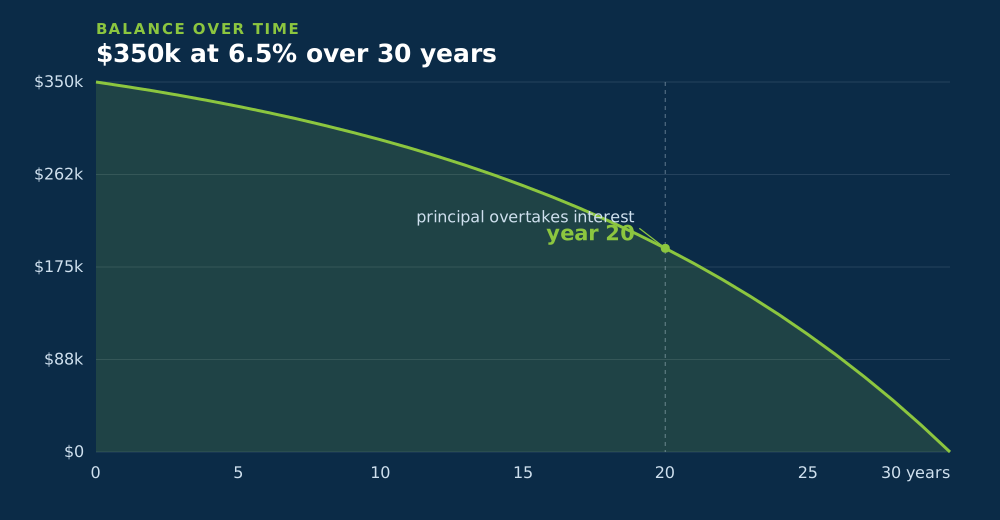
Unglamorous and almost always cheapest. Overpay where you can; every extra dollar goes straight to principal and pulls the balance under the value line sooner.
Sell privately rather than trading in
A private sale typically fetches meaningfully more than a trade-in valuation. On a $20,000 car the difference is often $2,000–$3,000, which may be most of the gap.
Refinance, carefully
A credit union may offer a materially lower rate, particularly if your score has improved since purchase. Refinance to a shorter or equal term. Extending the term to cut the payment deepens the problem you are trying to solve.
Pay the difference at trade-in
If you must change cars, write the cheque rather than rolling it. It hurts once instead of for six more years.
Preventing it next time
- Put 20% down on a new car, 10% on used. This roughly matches first-year depreciation.
- Cap the term at 48 months on used and 60 on new. If the payment only works beyond that, the car costs more than you can afford.
- Do not finance extras. Warranties and add-ons paid over six years at 8% cost far more than their sticker.
- Consider gap insurance if you are financing more than about 80% — it covers the shortfall if the car is written off while underwater, and is far cheaper bought from your own insurer than from the dealer.
- Buy a two-to-three-year-old car. The steepest depreciation has already been paid by someone else.