
Refinance break-even calculator
A lower payment is not the same as a saving. Two things decide a refinance: how long before the closing costs are recovered, and whether the lower payment came from a better rate or from stretching the debt over more years. Most calculators only show you the first.
Refinance calculator
The two questions
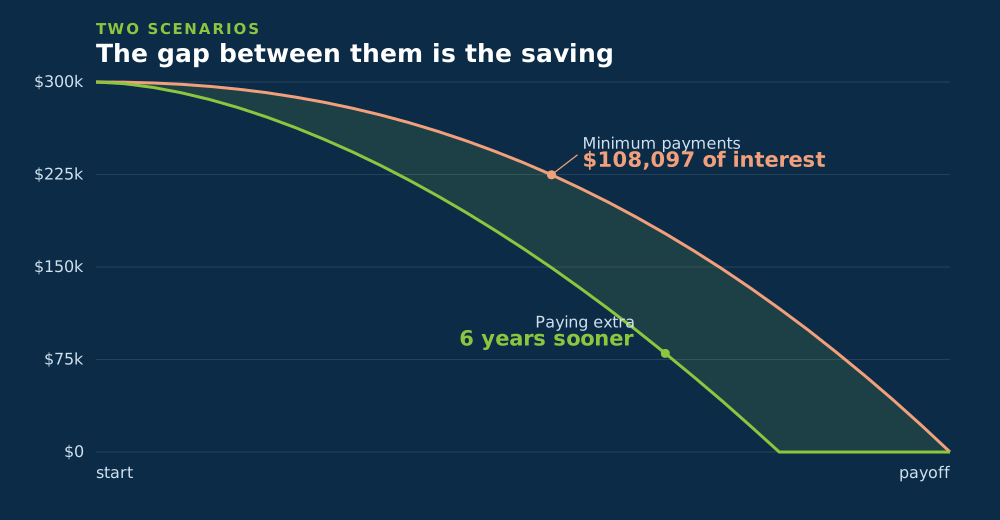
1. Will you still be there at break-even?
Closing costs divided by the monthly saving gives the number of months before you are ahead. If you expect to sell or refinance again before that date, the deal loses money however good the rate looks.
2. Are you resetting the clock?
Refinancing 26 remaining years into a fresh 30-year term lowers the payment partly because the rate fell and partly because you spread the debt over four more years. The monthly figure improves while total interest can get worse. Set the new term equal to the years you have left and you will see the rate's effect on its own.
If the total goes up but you want the lower payment for cash-flow reasons, that can still be a sound decision. Just make it knowingly.
Two break-even numbers, and why they differ
The headline figure is the usual one: closing costs divided by the monthly saving. It answers "when have I got my money back in cash flow?"
The chart answers a harder question. Each line is what an option has cost you at that moment — payments made so far, plus the balance you still owe. Where they cross is the point you are genuinely ahead. That date is usually later, because a longer new term pays principal down more slowly, so for a while you are saving on the payment but owing more than you would have.
Rolling costs into the loan
Adding closing costs to the balance does not make them disappear. You borrow them at the new rate for the whole term, which usually costs more than paying up front, and it pushes the real break-even further out than the simple division suggests.
Guides that explain this
Written with the same engine, so every figure agrees with the calculator.
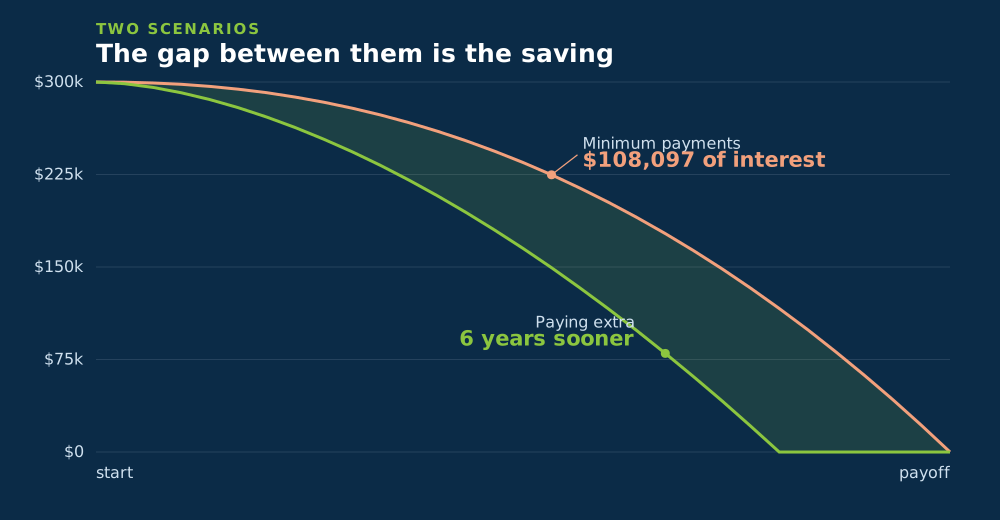 When refinancing actually saves moneyBreak-even maths, the term reset that hides a loss behind a lower payment, cash-out versus rate-and-term, and a checklist for deciding whether to refinance.10 min read
 APR vs interest rate: what actually separates themWhat separates APR from the interest rate, which fees are included, and why APR quietly flatters a loan you will not keep for its full term.8 min read
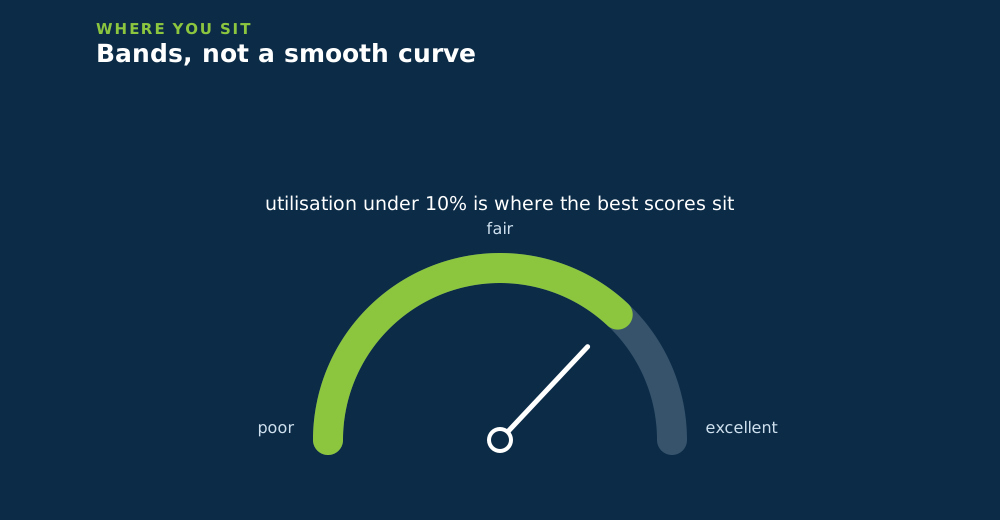 How your credit score sets your interest rateWhat a credit score is built from, how score bands translate into real rate differences and dollars, and which actions move a score quickly versus slowly.10 min read
Questions people actually ask
How do I calculate a refinance break-even point?
Divide your total closing costs by the amount your monthly payment falls. The answer is the number of months before the refinance has paid for itself. If you plan to move or refinance again before then, it does not pay off.
Does a lower monthly payment always mean I save money?
No. Refinancing a loan with 26 years left into a new 30-year term lowers the payment partly by stretching the debt over four extra years. The payment falls while total interest can rise. Compare the same term to isolate the effect of the rate.
Is it worth refinancing for a 1% lower rate?
There is no universal threshold. What matters is the size of the balance, the closing costs, how long you will keep the loan, and whether the term changes. A 1% cut on a large balance you will hold for a decade is usually worthwhile; the same cut on a small balance you will clear in three years often is not.
Should I roll the closing costs into the new loan?
It preserves your cash but you then pay interest on those costs for the whole term, which usually costs more in total and pushes the real break-even further out.
Other calculators
- Amortization scheduleThe whole table, payment by payment, with extra payments and a CSV export.
- Extra payment calculatorWhat $200 a month is worth in interest saved and years removed.
- Compare three offersDifferent rates, terms and fees judged on total cost, not monthly payment.
- Biweekly vs monthlyWhether fortnightly payments are worth it, and how to get the same result free.
- Mortgage calculatorPrincipal, interest, tax, insurance, PMI and HOA in one honest number.
- Auto loan calculatorTrade-in, negative equity, sales tax and dealer fees, all financed.