
How we calculate
Every number on this site comes from the formulas below. If a result looks wrong, this page should let you check it by hand.
The level payment formula
For a fixed-rate loan repaid in equal instalments:
M = P × r ÷ (1 − (1 + r)−n)
P is the amount borrowed, r the periodic rate, n the number of payments. For a monthly loan, r is the annual rate divided by twelve. At a zero rate the payment is simply P divided by n.
Worked example: $350,000 at 6.5% over 30 years gives a payment of $2,212.24 and total interest of $446,405.71. Those are the figures this engine is tested against.
Building the schedule
Each period we charge interest on the outstanding balance, then apply the remainder of the payment to principal:
- Interest = balance × r
- Principal = payment − interest
- New balance = balance − principal
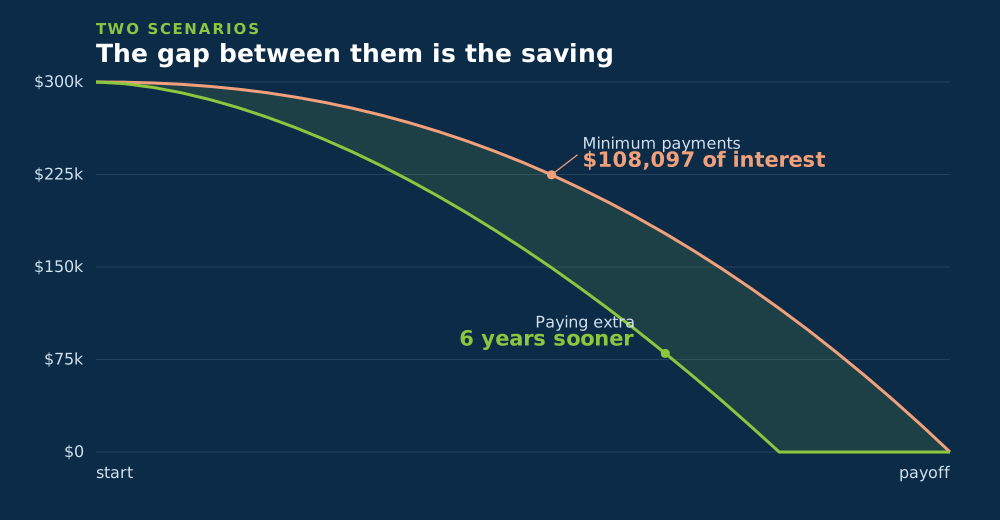
Extra payments go entirely to principal in the period they are made. The final payment is reduced so the balance lands exactly on zero rather than overshooting. If a payment would not cover the interest charged, we stop and say so instead of showing a balance that grows forever.
Biweekly schedules
A biweekly loan is modelled as 26 periods a year, with a periodic rate of the annual rate divided by 26 and a payment of half the monthly amount. This matches how most servicers run these plans. It approximates a true daily-accrual loan; over a full term the difference is normally a few dollars.
What we deliberately do not model
- Day-count conventions. Notes vary between 30/360, actual/365 and actual/360. We use a simple periodic rate, which matches most consumer loans closely but not exactly.
- Payment timing. We assume payments arrive on schedule. On a loan that accrues daily, paying early or late changes the interest.
- Rate changes. Every calculator assumes a fixed rate. Adjustable loans cannot be projected honestly because the future rate is unknown.
- Escrow adjustments. Tax and insurance are held constant. In reality they are reassessed, and usually rise.
Why your lender's figure differs
A few dollars a month comes from rounding and day counts. A large gap almost always means something is in their number that is not in yours: a financed origination fee, mortgage insurance, an escrow shortage being made up over twelve months, or a different rate than the one you were quoted. Ask for a breakdown rather than assuming either figure is wrong.
What this site is not
These are estimating tools. They are not financial, tax or legal advice, they do not constitute an offer of credit, and no figure here is a quote. We do not lend money, arrange loans, or pass your details to anyone - there is nothing to pass on, because every calculation runs in your browser and nothing you type leaves the page.
Guides that explain this
Written with the same engine, so every figure agrees with the calculator.
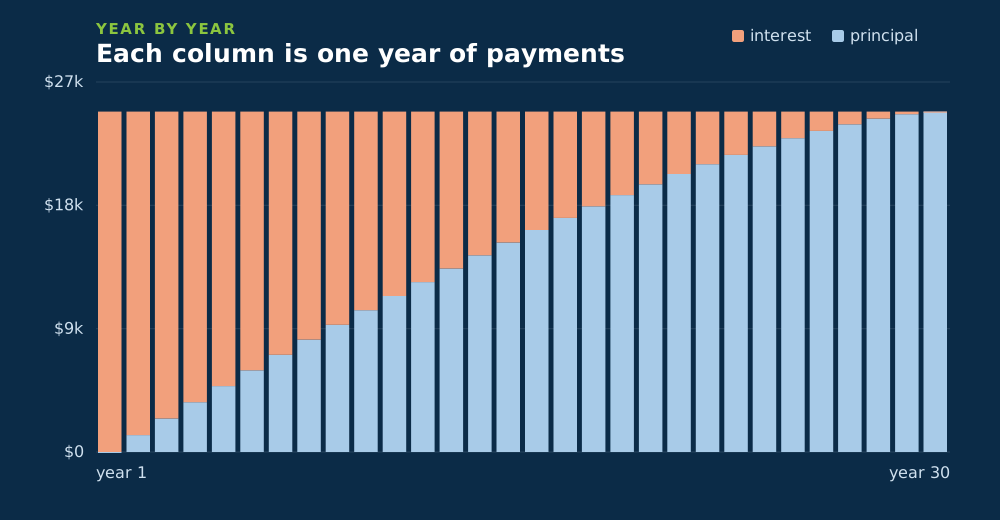 Amortization explained: where every payment actually goesA plain-English guide to amortization — why early payments are almost all interest, when the crossover happens, and how to read your own schedule with confidence.9 min read
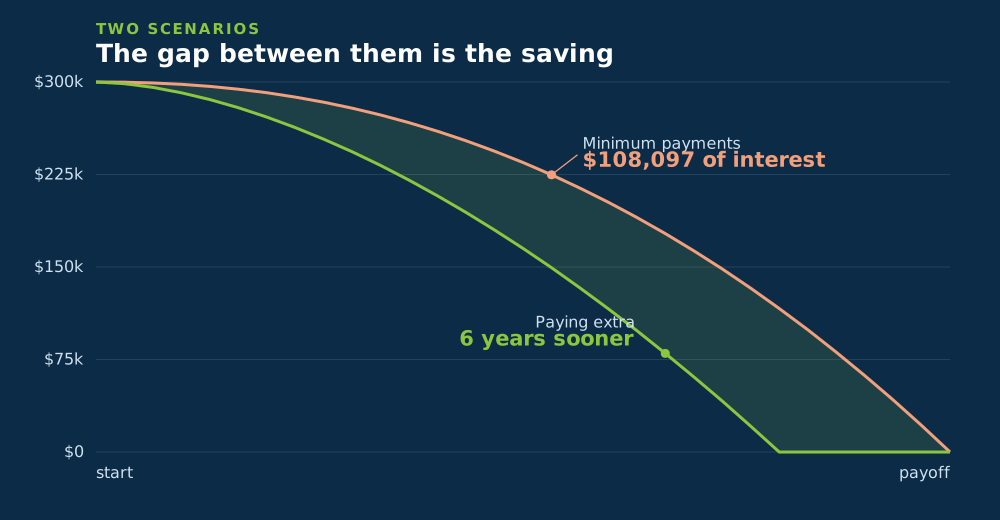 Compound interest works both waysHow compounding works, why frequency matters far less than people think, the rule of 72, and why the same force that grows savings traps card debt.9 min read
Questions people actually ask
What formula do loan calculators use?
The level-payment annuity formula: payment equals principal times the periodic rate, divided by one minus one plus the periodic rate raised to the negative number of payments. The periodic rate is the annual rate divided by the number of payments per year.
Why does my bank's payment differ by a few dollars?
Rounding and day-count conventions. Notes may accrue on a 30/360, actual/365 or actual/360 basis, and lenders round at different points. A few dollars a month is normal; a large gap usually means a fee or insurance item is included.
Is my data sent anywhere?
No. Every calculation runs in your browser. Nothing you enter is transmitted, stored or shared.
All calculators
- Amortization scheduleThe whole table, payment by payment, with extra payments and a CSV export.
- Extra payment calculatorWhat $200 a month is worth in interest saved and years removed.
- Refinance break-evenWhen the closing costs are recovered, and whether a new term quietly costs more.
- Compare three offersDifferent rates, terms and fees judged on total cost, not monthly payment.
- Biweekly vs monthlyWhether fortnightly payments are worth it, and how to get the same result free.
- Mortgage calculatorPrincipal, interest, tax, insurance, PMI and HOA in one honest number.
- Auto loan calculatorTrade-in, negative equity, sales tax and dealer fees, all financed.